


Scheduling might not be the most glamorous part of running an appliance repair business, but it’s one of the most expensive to get wrong. Missed appointments, technicians crisscrossing the city, and jobs that run long and blow up the rest of the day. These aren’t just frustrations. They’re margin killers. The good news is that even modest improvements to how you schedule and dispatch can have a significant impact on your bottom line.
The Common Scheduling Pain Points
Most appliance repair businesses struggle with the same handful of issues. Double-bookings and last-minute gaps waste technician time and erode customer trust. Overbooking by skill level is another common trap: sending a tech to a job they’re not equipped to handle, or dispatching someone with no parts on hand for a job that requires them, costs everyone time. And without real-time visibility into job status, your office team is constantly guessing where things stand. These problems compound throughout the day, and by afternoon, a schedule that looked reasonable at 8 a.m. is in chaos.
Build Your Schedule Around the Right Variables
A good schedule isn’t just a list of jobs in time order. It’s built around the variables that determine whether a job will actually go smoothly. Two of the most important are skill and geography. Matching technicians to jobs based on their certifications and experience prevents wasted trips and callbacks. Grouping jobs by territory or geographic zone cuts drive time and keeps techs from spending half their day in traffic.
Parts availability is another variable that doesn’t get enough attention. Sending a technician to a job without the parts they’re likely to need — because no one checked the truck stock or confirmed parts were ordered — turns a one-visit job into a two-visit job. That’s a scheduling failure as much as it is a parts management failure. Before a job hits the schedule, it’s worth confirming that the tech assigned to it has what they’re likely to need, or that parts have been staged for pickup.
You also need to be realistic about job duration. Scheduling back-to-back jobs based on optimistic time estimates is a recipe for a domino effect of delays. Build in reasonable buffer time for parts runs, longer-than-expected jobs, and the occasional callback. Your techs will be less stressed, and your customers will stop getting late arrival calls.
The Dispatch Decision: Reactive vs. Proactive

Reactive dispatch, where you’re making decisions on the fly all day, is exhausting and inefficient. Proactive dispatch means planning tomorrow’s schedule today, pre-routing your techs, and only making real-time adjustments when necessary. That doesn’t mean you can’t handle same-day calls; it means you’ve reserved capacity for them intentionally, rather than trying to squeeze them in and hoping something doesn’t break. The shift from reactive to proactive is one of the highest-impact operational changes a service business can make.
Communication Is Half the Battle
Even a well-built schedule falls apart without good communication. On the customer side, clear arrival windows and proactive updates when those windows shift go a long way. Automated appointment reminders reduce no-shows and “I forgot someone was coming” calls that derail the day before it even starts.
On the technician side, real-time communication is just as critical. When a job gets added, moved, or cancelled, your techs need to know immediately and not through a phone chain or a text they might see twenty minutes later. Dispatchers also need visibility into what’s actually happening in the field: whether a job is running long, whether a tech is wrapping up early and can take another call, or whether a part wasn’t available and a return visit needs to be booked. Without that two-way flow of information, even a well-planned schedule starts to unravel by mid-morning.
Using Your Business Management Software to Optimize Scheduling
If you’re still managing your schedule on a whiteboard or a shared spreadsheet, you’re leaving efficiency on the table. Business management software built for appliance repair can centralize your job board, give your dispatch team real-time visibility into each technician’s location and job status, and automatically surface scheduling conflicts before they become problems.
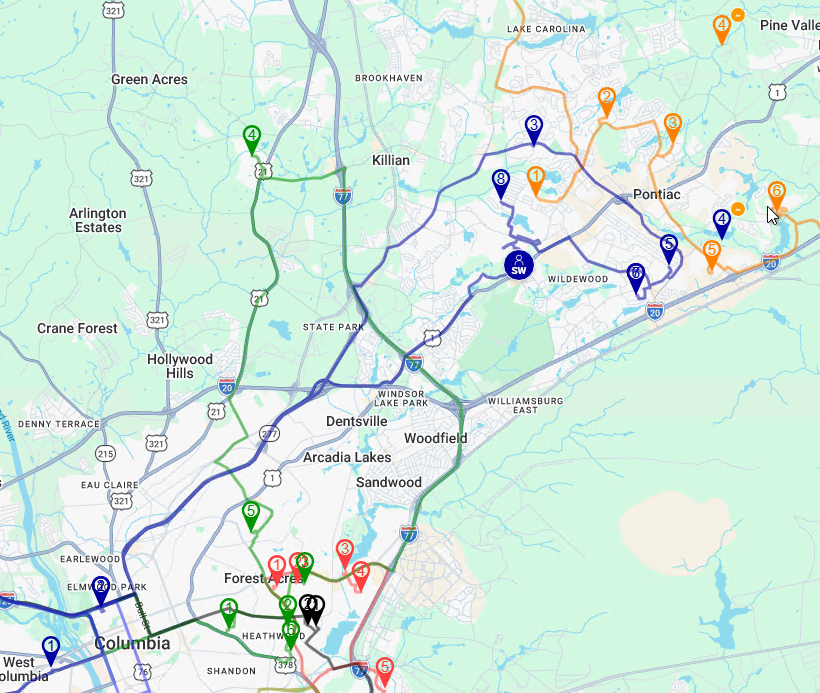
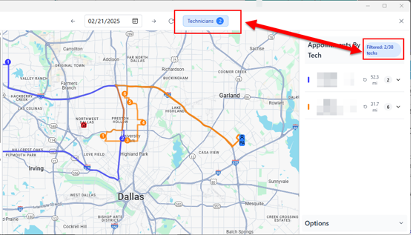
ServiceDesk is built to handle exactly this kind of complexity. The DispatchMap gives your team a live graphical view of every technician's route; displaying the time, location, and tech-assignment for every job on the schedule simultaneously so dispatchers can make smarter decisions in real time rather than working off a list that's already outdated. Appointments can be created and assigned directly from within the map, so your dispatch workflow stays in one place from the moment a call comes in to the moment a tech is on their way. The result is a schedule that's built around geography and availability, not just whoever picks up the phone first.
Metrics to Watch
You can’t improve what you don’t measure. Three scheduling metrics worth tracking regularly:
- Jobs completed per technician per day gives you a baseline for productivity and helps surface inefficiencies in how the day is structured. If one tech consistently completes significantly more or fewer jobs than the rest of the team, that’s a signal worth investigating; whether it points to routing issues, job type mismatch, or a training opportunity.
- Drive time as a percentage of total work time tells you whether your routing is working. If techs are spending more than 20–25% of their day in the truck, there’s room to tighten up your territory planning. Excess drive time is pure cost; it doesn’t generate revenue, it burns fuel, and it limits how many jobs a tech can realistically complete in a day.
- First-time fix rate has direct scheduling implications. Every callback is an unplanned job that eats into available capacity and pushes paying customers further out on the schedule. Tracking it helps you identify patterns — whether it’s a parts availability issue, a diagnostic training gap, or jobs being under-scoped on the initial call. Improving your first-time fix rate is one of the fastest ways to create more room in your schedule without adding headcount.

The Takeaway
Scheduling and dispatch improvements don’t require a complete overhaul of how you run your business. Small, consistent changes - better job matching, proactive planning, tighter routing, and the right software tools - compound quickly. Start by auditing your current process against the pain points above. If more than a couple hit close to home, your schedule is likely costing you more than you realize. The right tools and habits can turn that around faster than you’d expect.

