


In the appliance repair industry, most owners agree that repeat customers and local reputation are the lifeblood of the business. But too many shops treat completed jobs as closed chapters, storing customer names and invoice totals in a database, only to let that information gather digital dust.
If you are only using customer data to print receipts and file taxes, you are leaving steady revenue on the table.
Your field service data is a high-yield marketing asset. When collected and organized correctly, customer data helps you predict service needs, boost route density, increase repeat business, and drive higher-margin preventative maintenance contracts.
Here is how successful appliance repair businesses use their customer data to build long-term growth.
1. What Customer Data Should You Actually Be Tracking?
Before you can leverage data, you need to make sure your field technicians and office staff are gathering the right details on every call. Beyond basic contact details, your system should track:
- Appliance Profiles: Brand, type, model number, serial number, and approximate age.
- Service History: Past failure modes, parts replaced, and date of last service.
- Property Type: Single-family home, property management unit, commercial client, or rental.
- Technician Notes & Preferences: Gate codes, preferred appointment times, or specific customer requests.
- Location/Zip Code: Precise service locations to measure territory profitability.
A technician’s job isn't complete when the repair is finished. it’s complete when the appliance profile in your software is fully updated.

ServiceDesk’s Unit Information Sheet(UIS) system tracks appliance information and ties it to service history, allowing you to track appliances throughout their service life.
2. Four Ways to Turn Customer Data Into Steady Revenue
Strategy 1: Predict Maintenance & Launch Automated Reminders
Appliances operate on predictable maintenance cycles. Instead of waiting for a breakdown, use your historical data to trigger automated outreach:
- Dryer Vent Cleaning: Filter customers who had a dryer repair or vent service 12 months ago and send an automated email or text message to offer an annual inspection.
- Refrigerator Maintenance: Send pre-summer reminders for condenser coil cleanings to clients with older unit profiles.
- Water Filter Replacements: Set automated 6-month nudges for clients with high-end built-in refrigerators.
By reaching out before an emergency happens, you transition from a reactive "fix-it" shop to a trusted proactive home care partner.
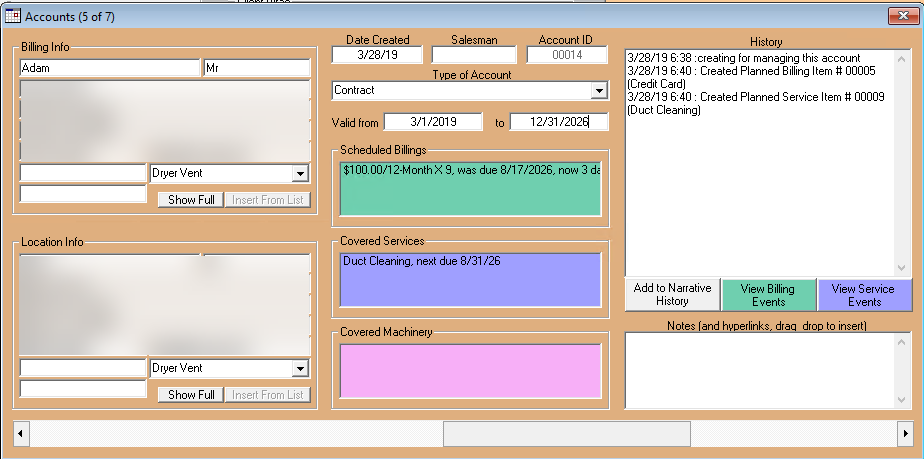
SD-Revenue Builder is a tool that you can use to manage service contracts and maintenance agreements. It integrates directly with ServiceDesk and allows you to set automated reminders for upcoming planned maintenance calls.
Strategy 2: Run Win-Back Campaigns for Inactive Clients
Acquiring a new customer costs 5 to 7 times more than retaining an existing one. Filter your customer database for homeowners who haven't booked a service call in 18–24 months.
Send a targeted, low-friction offer:
"We noticed it’s been a while since we serviced your home appliances. To keep your kitchen and laundry running smoothly, take $25 off your next tune-up or diagnostic fee this month."
This simple query-driven campaign fills gaps in your schedule without requiring expensive Google Ads spending.
Strategy 3: Maximize Route Density to Cut Overhead
Fuel and windshield time eat directly into profit margins. Analyzing geographic customer distribution allows you to:
- Identify high-density neighborhoods where you already have a strong footprint.
- Direct targeted local mailers or digital ads specifically into those profitable zip codes.
- Offer "Neighborhood Service Days" (e.g., "We’re servicing appliances in [Neighborhood Name] this Thursday—book now for $15 off service fee").
Increasing technician density by even two jobs per week per route dramatically lifts month-end profitability.
Strategy 4: Pitch Preventative Service Agreements at the Right Time
Trying to sell a service contract or maintenance plan to a customer with brand-new appliances is a tough sell. But if your database shows a household with 3+ appliances that are nearing the end of manufacturer warranty (up to 3 years with extended warranties), they are prime candidates. Warranty companies typically target these consumers for easy sell on continuing extended warranties. You might be able to pull that away for COD work.
Use your data to segment households by appliance age and send targeted pitches explaining how a maintenance membership protects against costly mid-life breakdowns.
3. Keep Your Data Clean and Centralized
Data is only valuable if it is accurate. To make this work smoothly without adding massive administrative overhead:
- Standardize Entry: Ensure model numbers and brand names are selected from drop-down menus rather than typed freehand.
- Use Integrated Software: Avoid using separate tools for scheduling, invoicing, and marketing. A unified business management platform automatically connects job history to customer records.
- Train Techs on the "Why": Show your technicians how clean data leads to better-prepared service vans, higher first-time fix rates, and happier customers.
Key Takeaway for Business Owners
You don't need a degree in data science to grow your appliance repair shop. You simply need to look at every completed service ticket not as an endpoint, but as the beginning of the next service cycle.
By organizing your customer data and setting up simple, repeatable touchpoints, you build a predictable revenue engine that keeps your trucks rolling year-round.

